
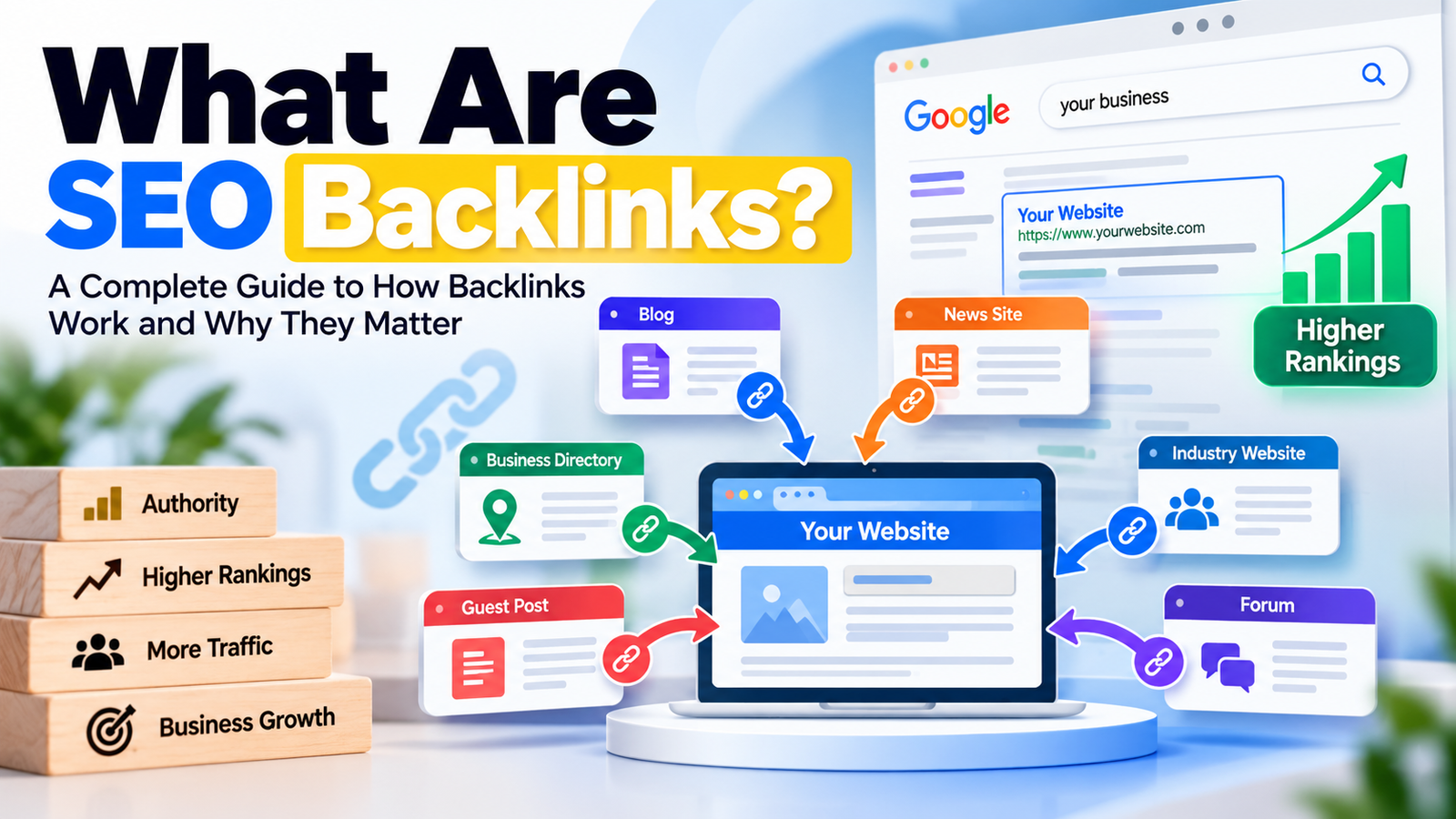
If you’re wondering what are SEO backlinks, they are links from other websites that point to your site. Search engines treat them as a signal of trust and relevance, a bit like recommendations. A few links from respected, relevant sites usually matter far more than hundreds of low-quality ones, and the safest way to earn them is by creating content and services worth linking to.
Backlinks are one of the most discussed parts of SEO, and also one of the most misunderstood. This guide explains what they are, how search engines view them, and how to build them without putting your site at risk.
A backlink is simply a hyperlink on another website that leads to a page on yours. If a local news site mentions your business and links to your homepage, that’s a backlink. If a supplier lists you as a partner with a link to your site, that’s a backlink too.
They matter because links have long been one of the ways search engines discover pages and judge which ones are worth trusting. We cover where this fits in the bigger picture in our guide to how SEO optimization works, where backlinks sit within off-page SEO.
Search engines can’t judge your reputation by looking at your own website alone. When other credible sites link to you, it suggests your content is useful or your business is genuine. That’s why backlinks for SEO remain one of many signals Google uses when deciding which pages to show.
Two things are worth keeping in mind:
Not all links are equal. Quality backlinks usually share a few traits:
Third-party scores like “domain authority” are useful for comparing sites, but they’re not Google’s own metrics, so treat them as a rough guide, not a guarantee.
Links can carry attributes that tell search engines how to treat them. Standard links pass signals normally, while nofollow, sponsored, and ugc attributes are used for links that shouldn’t be treated as editorial endorsements, such as ads, paid placements, and user-generated content. Google treats these as hints. We explain what this means in practice in our article on whether nofollow links help SEO.
Google’s spam policies specifically discourage manipulative link building. Be cautious of:
These tactics can lead to penalties or lost visibility, and recovery is slow. This is the territory we describe in our explainer on white hat and black hat SEO. If you think you have harmful links, Google has said most sites don’t need to disavow, so it’s best to review carefully, or get expert advice, before taking action.
Google Search Console includes a Links report that shows which sites link to yours. Paid tools like Ahrefs and Semrush offer deeper analysis, which we compare in our guide to SEO tools. Review your backlink profile periodically to understand where your links come from and spot anything unusual.
Earning quality links is gradual. A single strong editorial link may take weeks of outreach or content work, and the impact on rankings, if any, builds over time. Be wary of anyone promising a fixed number of links, or rankings, in a short window.
They're links from other websites to yours. Search engines use them as one signal of trust and relevance.
Yes, they remain one of the signals search engines consider, though they work alongside content quality, technical health, and search intent.
There's no set number. A smaller number of relevant, trustworthy links usually matters more than a large number of low-quality ones.
It's risky. Google's spam policies discourage buying links that pass ranking signals, and manipulated links can lead to penalties.
Use the Links report in Google Search Console for free, or a paid tool such as Ahrefs or Semrush for deeper analysis.

Grow Your Business with Result-Driven SEO & Digital Marketing Solutions. We Help Brands Increase Rankings, Traffic, and Quality Leads Organically.
| Monday | 9:30 AM - 6:30 PM |
| Tuesday | 9:30 AM - 6:30 PM |
| Wednesday | 9:30 AM - 6:30 PM |
| Thursday | 9:30 AM - 6:30 PM |
| Friday | 9:30 AM - 6:30 PM |
| Saturday | 9:30 AM - 6:30 PM |
| Sunday | Closed |
©Copyright @ 2026 RankPluto. | All Right Reserved
This will close in 0 seconds