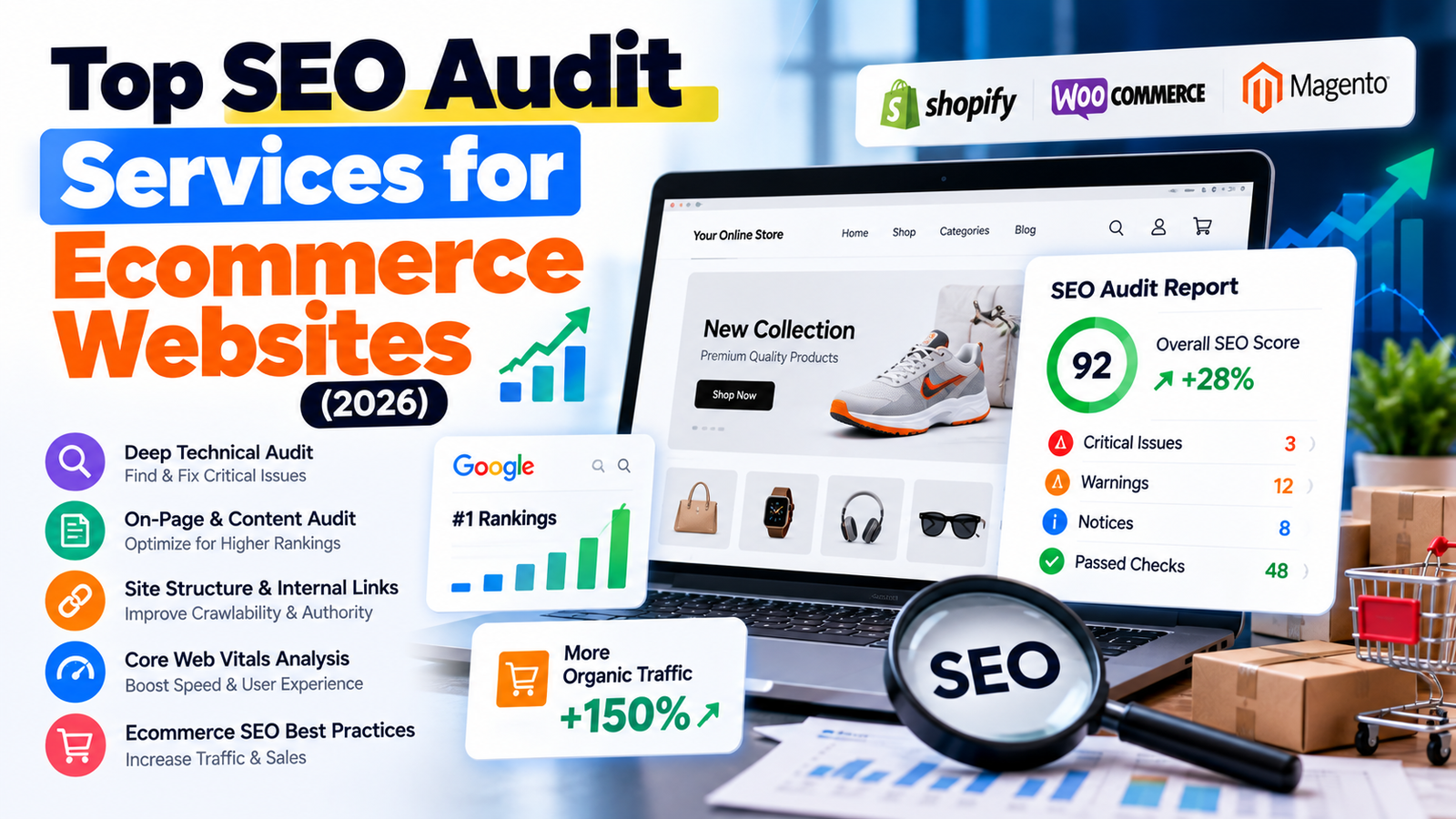
For most ecommerce sites, a solid SEO audit stack combines free baseline tools (Google Search Console, Analytics, PageSpeed Insights) with at least one comprehensive paid platform — Semrush or Ahrefs are the most widely used — and a dedicated crawler like Screaming Frog for larger catalogs. Beyond a certain size or complexity, many stores find more value in a full-service audit from an agency that can interpret the data and prioritize fixes, rather than relying on tools alone.
Organic search remains one of the largest traffic sources for ecommerce — industry research consistently puts it close to half of all ecommerce traffic — which is exactly why a thorough, regular audit matters more for online stores than for many other types of websites.
Ecommerce sites have audit needs that go beyond a typical website — large product catalogs, variant pages, filtered navigation, and frequently changing inventory all create SEO challenges that a generic site audit can miss. A genuinely useful ecommerce technical SEO audit should check:
Before considering any paid audit platform, a few free tools should already be connected to every ecommerce site:
These tools are foundational, but on their own they don’t provide the prioritized, actionable recommendations a full audit service delivers.
Semrush is among the most widely used all-in-one platforms for ecommerce SEO audits, combining keyword research, technical site audits, competitor analysis, and content optimization in a single dashboard — making it a strong fit for teams that want prioritized recommendations rather than disconnected reports from separate tools.
Ahrefs is particularly strong on the technical and authority side, with a site audit feature that checks for a large range of technical and on-page issues, plus deep backlink and competitor analysis. It’s a common choice for technical SEO teams that need precise, page-level evidence to act on.
Screaming Frog is a dedicated crawler rather than an all-in-one suite, and it earns its place specifically for larger product catalogs — stores with hundreds or thousands of product pages accumulate technical debt quickly, and a focused crawl tool catches issues that broader platforms can sometimes summarize too generally to act on directly.
Surfer SEO focuses specifically on content optimization, comparing existing or draft content against top-ranking pages for a target keyword — useful for improving thin product descriptions or category page content identified during a broader audit.
Running these tools produces data — a genuinely useful SEO audit service turns that data into a prioritized, actionable plan. This distinction matters more for ecommerce than for simpler sites, since a large catalog can easily surface hundreds of technical findings, many of which matter far less than others. Knowing which five issues to fix first, out of two hundred flagged problems, is where an experienced auditor adds real value beyond what the raw tool output provides.
A full-service audit typically makes the most sense when:
Not all audit services are equally thorough. A genuinely useful one should:
Free tools like Search Console and Analytics are essential but limited in scope. Stores with larger catalogs or more competitive categories typically benefit from a paid platform like Semrush or Ahrefs for deeper, prioritized insights.
A full audit every 6 to 12 months is typical for most stores, with more frequent technical checks (monthly or quarterly) recommended for larger catalogs that change inventory often.
A tool generates data and flags issues. A service (often from an agency or consultant) interprets that data, prioritizes it by actual business impact, and provides a specific action plan.
For very large product catalogs, yes — Screaming Frog's focused crawling often surfaces granular, page-level technical issues that broader all-in-one platforms can summarize too generally.
When the catalog is too large to interpret tool output efficiently in-house, when a ranking or traffic drop needs root-cause investigation, or when planning a platform migration that carries real SEO risk.
Grow Your Business with Result-Driven SEO & Digital Marketing Solutions. We Help Brands Increase Rankings, Traffic, and Quality Leads Organically.
| Monday | 9:30 AM - 6:30 PM |
| Tuesday | 9:30 AM - 6:30 PM |
| Wednesday | 9:30 AM - 6:30 PM |
| Thursday | 9:30 AM - 6:30 PM |
| Friday | 9:30 AM - 6:30 PM |
| Saturday | 9:30 AM - 6:30 PM |
| Sunday | Closed |
©Copyright @ 2026 RankPluto. | All Right Reserved
This will close in 0 seconds