What Are SEO Backlinks? Types, Value & How to Earn Them

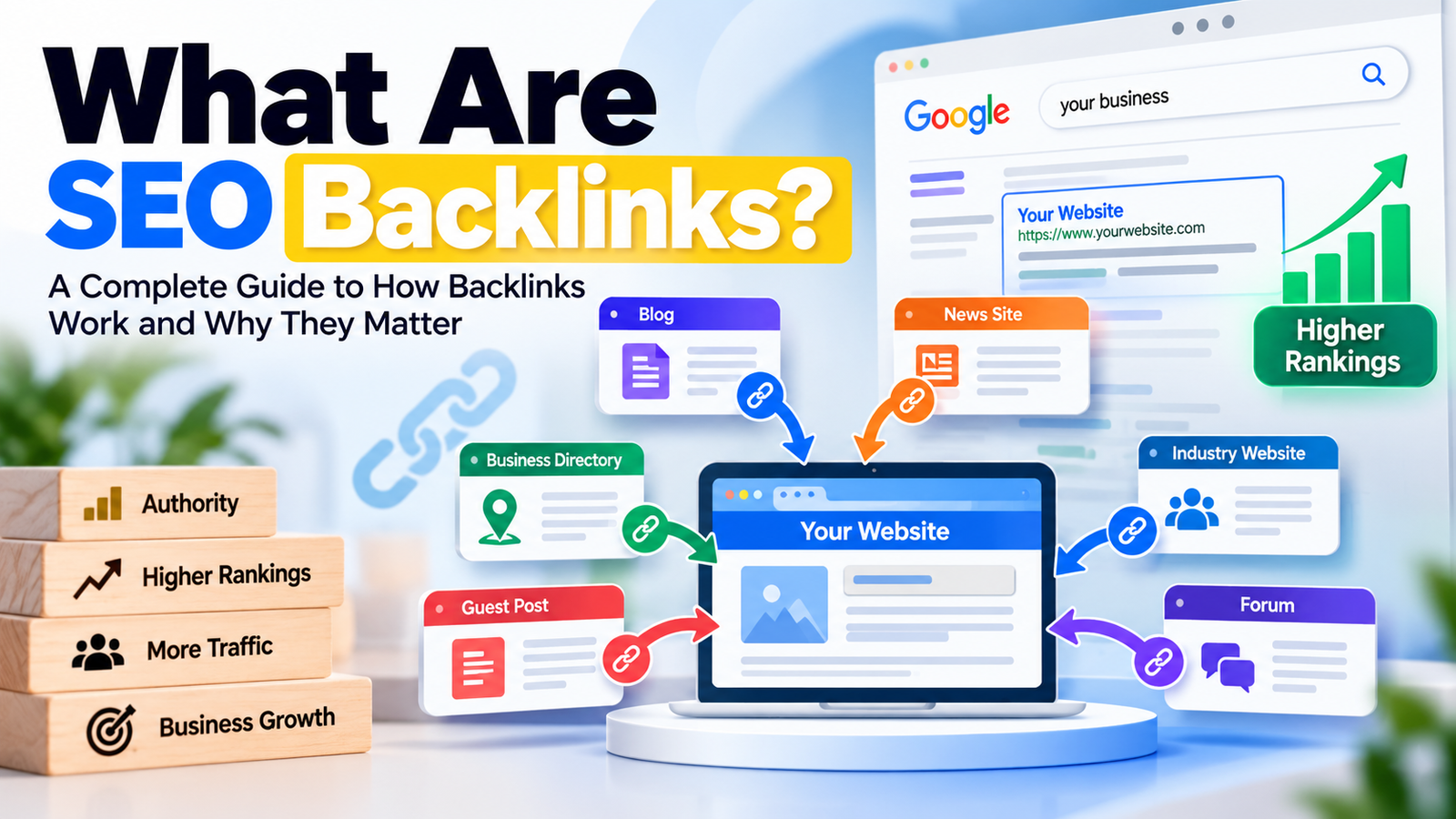
what are seo backlinks

What Are SEO Backlinks? Types, Value, and How to Earn Them

If you’re wondering what are SEO backlinks, they are links from other websites that point to your site. Search engines treat them as a signal of trust and relevance, a bit like recommendations. A few links from respected, relevant sites usually matter far more than hundreds of low-quality ones, and the safest way to earn them is by creating content and services worth linking to.

Backlinks are one of the most discussed parts of SEO, and also one of the most misunderstood. This guide explains what they are, how search engines view them, and how to build them without putting your site at risk.

What a Backlink Actually Is

A backlink is simply a hyperlink on another website that leads to a page on yours. If a local news site mentions your business and links to your homepage, that’s a backlink. If a supplier lists you as a partner with a link to your site, that’s a backlink too.

They matter because links have long been one of the ways search engines discover pages and judge which ones are worth trusting. We cover where this fits in the bigger picture in our guide to how SEO optimization works, where backlinks sit within off-page SEO.

Why Backlinks Matter for SEO

Search engines can’t judge your reputation by looking at your own website alone. When other credible sites link to you, it suggests your content is useful or your business is genuine. That’s why backlinks for SEO remain one of many signals Google uses when deciding which pages to show.

Two things are worth keeping in mind:

  • Backlinks are one signal among many. Content quality, technical health, and search intent still matter greatly, and links can’t rescue a poor page.
  • Backlinks also send visitors. A link from a relevant site can bring real people to you, which is valuable regardless of any ranking effect.

What Makes a Backlink Good?

Not all links are equal. Quality backlinks usually share a few traits:

  • Relevance — the linking site covers a topic related to yours. A link to a dental clinic from a local health blog is more meaningful than one from an unrelated site.
  • Trustworthiness — the source is a legitimate, established site with real content and real readers.
  • Editorial placement — the link sits naturally inside useful content, rather than being dropped into a footer or a list of random links.
  • Natural anchor text — the clickable words describe the page honestly, instead of repeating an exact keyword every time.
  • Genuine value — someone could actually click the link and benefit from it.

Third-party scores like “domain authority” are useful for comparing sites, but they’re not Google’s own metrics, so treat them as a rough guide, not a guarantee.

Types of Backlinks You'll Come Across

  • Editorial links — earned when someone links to your content or business because it’s useful. These are the most valuable.
  • Guest contributions — articles you write for another relevant site, usually with an author bio or a contextual link.
  • Business listings and citations — directories and local listings that reference your business details.
  • Partner and supplier mentions — links from companies you work with.
  • Press and media mentions — coverage from news or industry publications.
  • Social and forum links — useful for visibility and traffic, but often carry little direct ranking value.

Follow, Nofollow, and Sponsored Links

Links can carry attributes that tell search engines how to treat them. Standard links pass signals normally, while nofollow, sponsored, and ugc attributes are used for links that shouldn’t be treated as editorial endorsements, such as ads, paid placements, and user-generated content. Google treats these as hints. We explain what this means in practice in our article on whether nofollow links help SEO.

Bad Backlinks and Practices to Avoid

Google’s spam policies specifically discourage manipulative link building. Be cautious of:

  • Buying or selling links that pass ranking signals without being disclosed with the proper attribute.
  • Link farms and private blog networks built only to create links.
  • Mass directory or comment spam, and automated link-building tools.
  • Excessive exact-match anchor text that looks unnatural.

These tactics can lead to penalties or lost visibility, and recovery is slow. This is the territory we describe in our explainer on white hat and black hat SEO. If you think you have harmful links, Google has said most sites don’t need to disavow, so it’s best to review carefully, or get expert advice, before taking action.

How to Earn Backlinks Safely

  1. Create link-worthy content — original data, genuinely helpful guides, tools, or checklists that others want to reference.
  2. Contribute expertise — write useful guest content for relevant publications, focused on helping their readers, not just getting a link.
  3. Build real relationships — partners, suppliers, local organizations, and industry groups often link to businesses they know.
  4. Pursue local and press opportunities — sponsorships, events, and community stories can earn credible mentions.
  5. Reclaim unlinked mentions — if a site mentions your brand without linking, politely ask whether they can add one.
  6. Keep listings accurate — consistent business details across reputable directories support trust.

How to Check Your Backlinks

Google Search Console includes a Links report that shows which sites link to yours. Paid tools like Ahrefs and Semrush offer deeper analysis, which we compare in our guide to SEO tools. Review your backlink profile periodically to understand where your links come from and spot anything unusual.

How Long Does Link Building Take?

Earning quality links is gradual. A single strong editorial link may take weeks of outreach or content work, and the impact on rankings, if any, builds over time. Be wary of anyone promising a fixed number of links, or rankings, in a short window.

FREQUENTLY ASKED QUESTIONS

They're links from other websites to yours. Search engines use them as one signal of trust and relevance.

How SEO Optimization Works: Crawling, Indexing & Ranking

How SEO Optimization Works

How SEO Optimization Works: Crawling, Indexing, and Ranking Explained

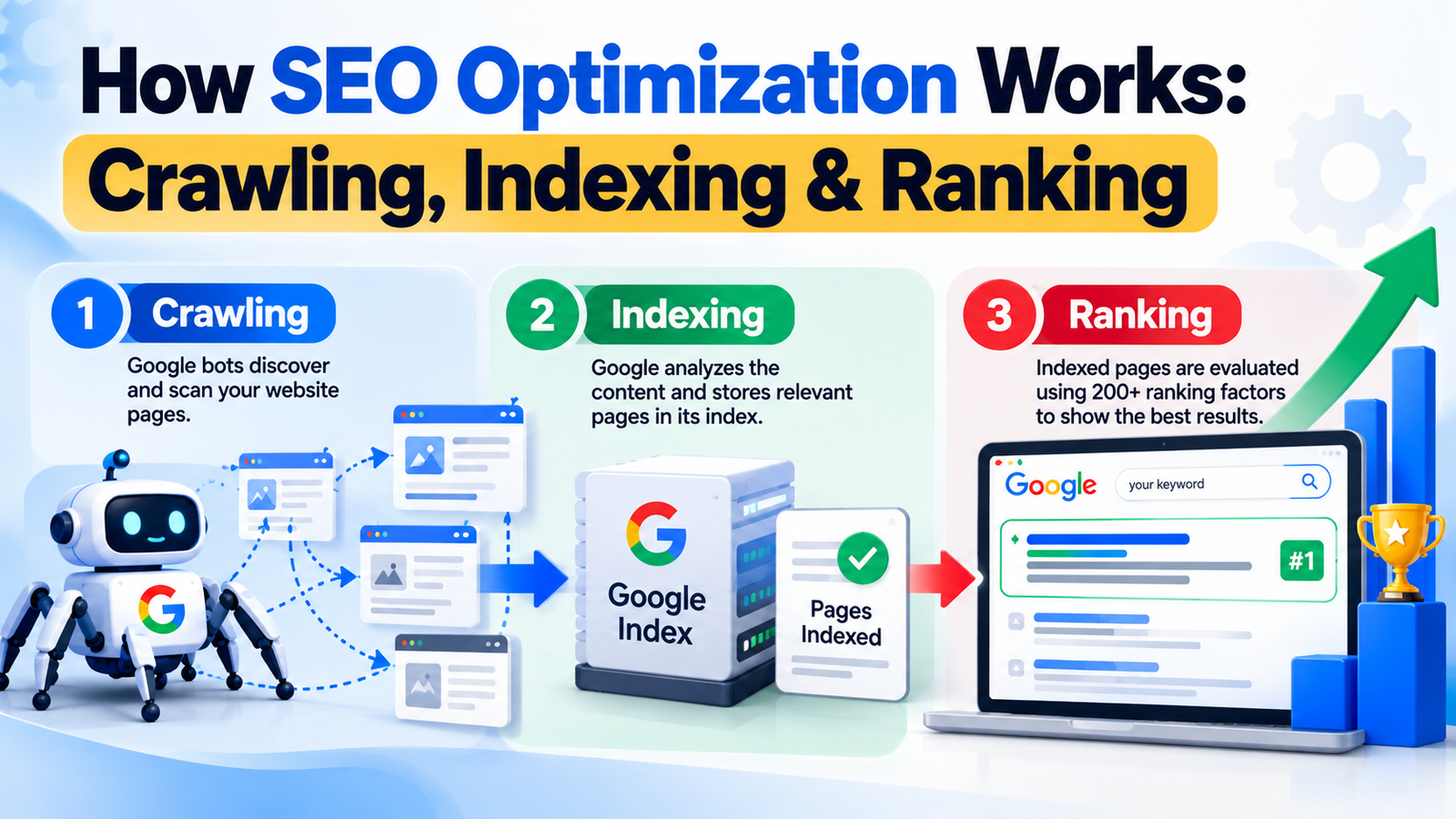
Understanding how SEO optimization works starts with a simple three-stage process. Search engines first crawl the web to discover pages, then index them by storing and understanding their content, and finally rank them by relevance and quality when someone searches. SEO is the work of making your pages easy to crawl, easy to understand, and worth ranking — through technical health, helpful on-page content, and trust signals from elsewhere on the web.

If SEO has ever felt like a collection of unrelated tips, it helps to see the system underneath. Once you understand the stages, most SEO advice starts to make logical sense.

Stage 1: Crawling — How Search Engines Find Your Pages

Search engines use automated programs, often called crawlers or bots, to discover pages. They move from link to link, and they also read sitemaps that site owners submit. If a crawler can’t reach a page — because it’s blocked, broken, hidden behind a login, or isolated with no links pointing to it — that page can’t appear in search results at all.

What this means for SEO: Make sure important pages are linked from elsewhere on your site, your sitemap is submitted through Google Search Console, and nothing is accidentally blocking crawlers.

Stage 2: Indexing — How Search Engines Understand Your Pages

After crawling, the search engine analyzes the page: its text, headings, images, links, and structure, along with signals such as language and location. It then stores information about the page in its index, which is essentially a vast database used to answer searches. Not every crawled page gets indexed — pages that are duplicates, very thin, or low in value may be left out.

What this means for SEO: Clear structure, unique content, and descriptive titles and headings help search engines understand what each page is about and why it deserves a place in the index.

Stage 3: Ranking — How Search Engines Choose What to Show

When someone searches, the engine looks through its index and orders results using many signals. Google doesn’t publish the exact list or weights, but its guidance consistently points to a few themes:

  • Relevance — how well the page matches the meaning and intent of the search, not just its exact words. We cover this in more depth in our article on whether Google uses keywords for SEO.
  • Quality and helpfulness — whether the content genuinely answers the question and demonstrates real experience and expertise.
  • Usability — how fast and easy the page is to use, especially on mobile.
  • Context — factors such as the searcher’s location, language, and search history can change what appears.

Because the exact formula isn’t public, be cautious of anyone who claims to know precise ranking factors or promises guaranteed positions.

The Three Pillars of SEO Optimization

Most SEO work falls into three connected areas.

1. Technical SEO

This is the foundation that lets search engines access and understand your site. It includes site speed, mobile-friendliness, secure connections (HTTPS), clean site architecture, sitemaps, and fixing broken links or duplicate pages. If the technical side is weak, strong content can still struggle to perform.

2. On-Page SEO

This covers what’s on the page itself: content that matches search intent, clear headings, well-written titles and meta descriptions, descriptive image alt text, and sensible internal links. Good on-page SEO makes it obvious to both visitors and search engines what each page offers.

3. Off-Page SEO

This covers signals from outside your website — mainly links and mentions from other trustworthy sites, plus your overall reputation. When credible sources reference your business, it helps show that you’re a real, established presence. Quality matters far more than quantity here.

Why Search Intent Sits at the Center

Every search has a purpose: to learn something, compare options, find a specific site, or take action. Search engines try to match results to that purpose. A page that matches the intent behind a query has a much better chance than one that simply repeats the keyword. This is why modern SEO starts by asking what the searcher actually wants, not which phrase to repeat.

How AI Search Fits In

AI-generated summaries and answer engines still rely on the same foundation: content that can be found, understood, and trusted. Pages that give clear, direct answers, use organized structure, and come from credible sources tend to be easier for these systems to use. In other words, solid SEO fundamentals and clear writing support both traditional rankings and AI-driven visibility.

Why SEO Takes Time

Search engines need time to discover changes, evaluate your content, and see how it compares with competitors. Trust signals, such as links and reputation, also build gradually. That’s why SEO is usually a steady investment rather than a quick fix, and why timelines vary widely by competition and starting point.

Putting It Together

A practical way to apply all of this: first make sure your site can be crawled and indexed, then make each page genuinely useful for the search it targets, and then build credibility through reviews, mentions, and links. Repeat, measure, and improve.

FREQUENTLY ASKED QUESTIONS

It depends on your timeline. If a small business needs leads immediately, PPC is better in the short term. If the goal is sustainable, long-term growth on a limited budget, SEO usually delivers a better return over 12+ months.


How to Rank Your Business on Google: A Practical Roadmap

Google Business Ranking Roadmap

How to Rank Your Business on Google: A Practical Roadmap

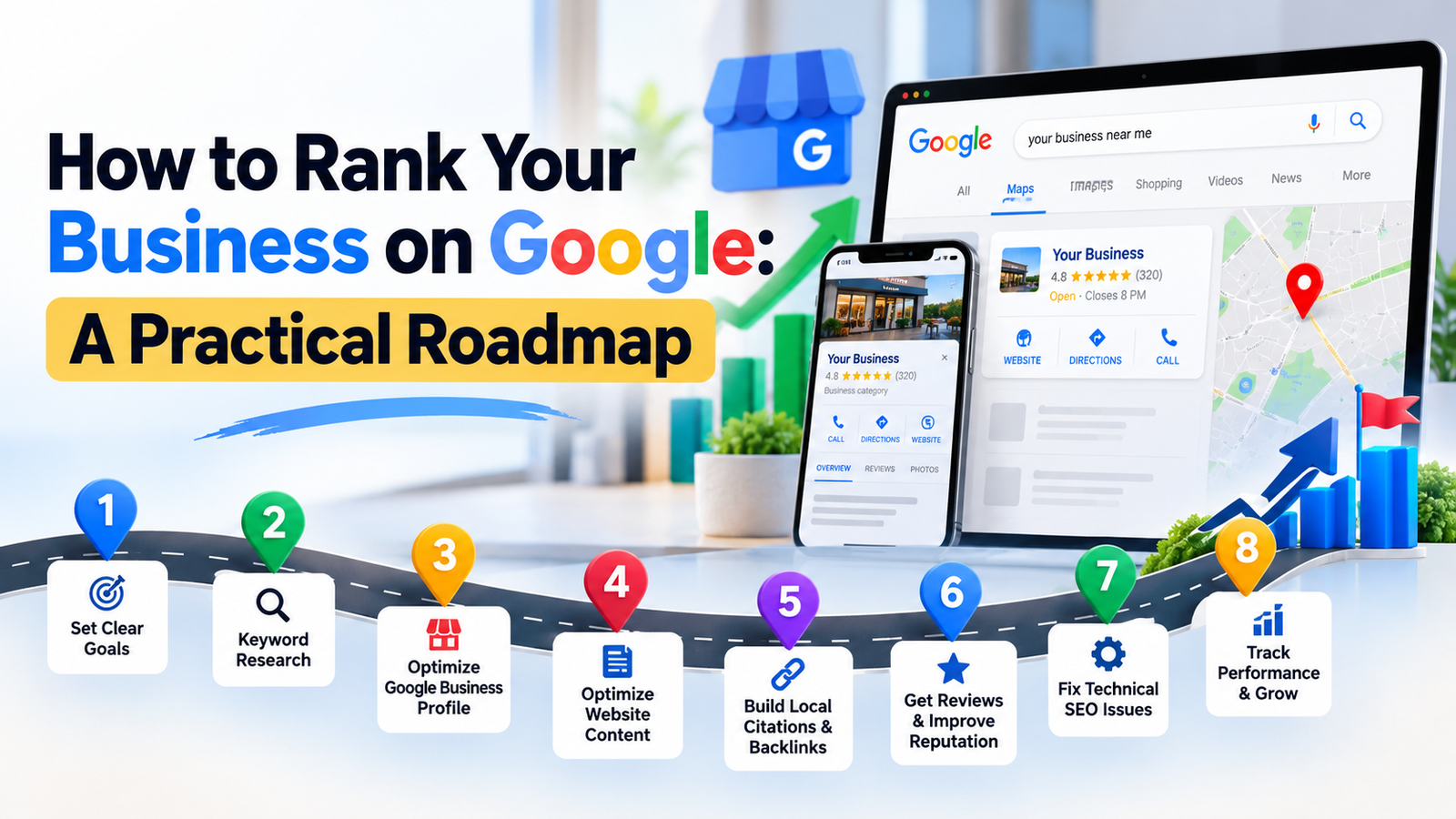
To rank your business on Google, you need to do five things well: set up and complete your Google Business Profile, build a fast and clearly structured website, create content that answers what your customers actually search for, earn genuine reviews, and gain links and mentions from trustworthy sources. None of these works alone, and none produces overnight results — but together they form the foundation almost every business that ranks consistently has in place.

Most business owners know they should be on Google, but few have a clear order of operations. This roadmap puts the steps in the sequence that tends to make sense, so you spend your time on what moves the needle first.

How Google Decides What to Rank

Google’s goal is to show the most helpful, trustworthy result for each search. For a business, that comes down to three broad questions: Is this result relevant to what the person searched? Is the business trustworthy and established? And, for local searches, is it close enough to be useful? Everything in this guide supports one or more of those three questions.

Step 1: Set Up Your Google Business Profile

If customers find you by searching for a service in their area, your Google Business Profile is often the single most valuable thing you can set up, and it’s free. Claim your listing, get it verified, choose the most accurate primary category, and fill in your address or service area, hours, phone number, services, and photos. This is what helps you appear on Google Maps and in the local results at the top of the page.

If you want the full walkthrough, we cover it in detail in our guides to local SEO and to setting up a Google Business Profile for Indian businesses.

Step 2: Build a Website Google Can Understand

Even if most of your customers find you through Maps, your website is how Google confirms what you do. The basics matter more than clever tricks:

  • Clear pages for each service — one focused page per core service, instead of one page trying to cover everything.
  • Your location and contact details — easy to find, and identical to what’s on your profile.
  • Fast loading and mobile-friendly design — most searches happen on phones, and slow pages lose visitors.
  • Clean structure — logical headings, descriptive page titles, and meta descriptions written for people, not just search engines.
  • Internal links — connecting related pages so visitors and Google can easily move between them.

Step 3: Know What Your Customers Actually Search

Ranking for terms nobody searches is wasted effort, and ranking for terms that don’t bring buyers is only slightly better. Start by listing the questions and phrases your customers use when they need what you offer, including how they phrase it in everyday language, not just industry terms. Free tools like Google Search Console (once your site is verified) show what people already search to find you, and Google’s own autocomplete suggestions reveal common phrasing.

Group these searches by intent. Someone searching “emergency plumber near me” is ready to call. Someone searching “how to fix a leaking tap” is researching. Both are valuable, but they call for different pages.

Step 4: Create Content That Genuinely Helps

Content is how a website earns visibility beyond its core service pages. Answer real customer questions clearly, put the direct answer near the top, and use simple headings so both readers and search engines can follow the structure. Helpful content also builds trust before a customer ever contacts you.

A practical way to start: write about the ten questions your customers ask most often. If you answer them better than the competition, you give Google a reason to show you.

Step 5: Earn Genuine Reviews

Reviews influence both whether you rank and whether people choose you once they see you. Ask satisfied customers shortly after a good experience, make it easy with a direct review link, and reply to every review, including critical ones, politely and specifically. Never buy or fake reviews — Google actively works to detect and remove them, and the reputational risk isn’t worth it. We explain how reviews connect to rankings in more detail in our article on whether Google reviews help SEO.

Step 6: Build Links and Mentions From Trusted Sources

When other credible websites mention or link to your business, it signals that you’re a real, established presence. Good starting points include relevant local and industry directories, local news or community sites, suppliers and partners who can list you, and guest contributions on respected industry blogs. Quality matters far more than quantity — a few relevant, genuine mentions are worth more than hundreds of low-quality links, which can do harm.

Step 7: Measure and Adjust

Set up Google Search Console and Google Analytics so you can see which searches bring visitors, which pages perform, and where people drop off. Review them monthly, not daily — rankings fluctuate, and trends matter more than single-day changes. Use what you learn to decide what to improve next.

How Long Does It Take?

Honest answer: it varies. Local profile improvements can show up sooner, while ranking a website for competitive terms usually takes months of consistent work. Your starting point, your competition, and how consistently you execute all affect the timeline. We break down realistic expectations in our guide to how long SEO takes.

Common Mistakes to Avoid

  • Leaving your Google Business Profile unverified or incomplete.
  • Inconsistent business details across your website, profile, and directories.
  • Publishing content only once and never updating it.
  • Chasing shortcuts like bought links or keyword stuffing.
  • Ignoring reviews, or only responding to the positive ones.

FREQUENTLY ASKED QUESTIONS

Create and verify a Google Business Profile, make sure your website clearly describes your services and location, and keep your details consistent across the web. This is the foundation for appearing in both Maps and regular search results.

Local SEO in India: Google Business Profile Guide (2026)

local SEO for Indian businesses

Local SEO for Indian Businesses: Complete Google Business Profile Guide

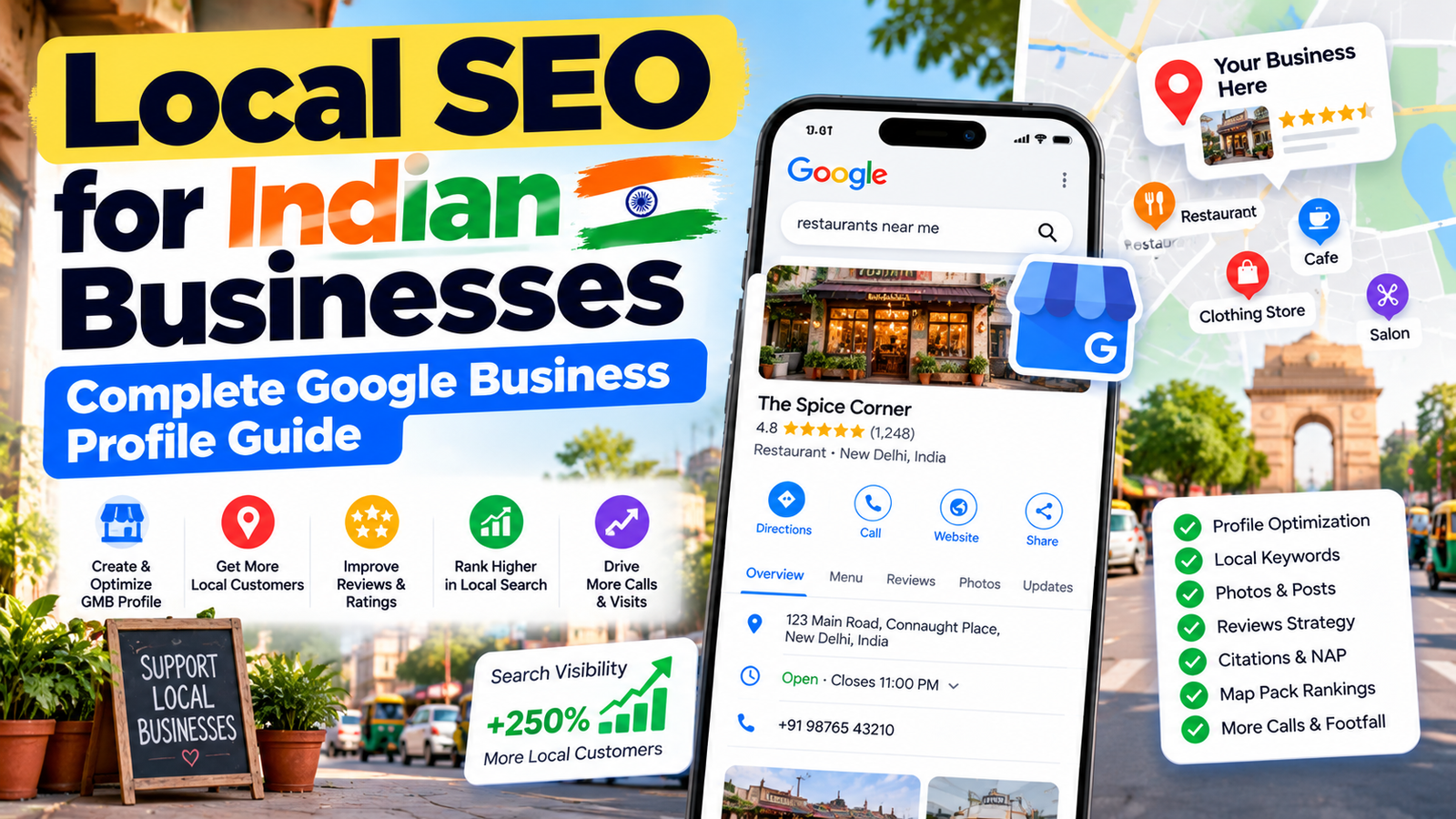
Local SEO for Indian businesses depends heavily on one free asset — your Google Business Profile (formerly called Google My Business, or GMB). A complete, verified, regularly updated profile, backed by genuine reviews and consistent business details across the web, is the single biggest lever for appearing in Google Maps and the local results shown for “near me” searches.

If you run a clinic, shop, salon, coaching centre, or any business that serves customers in a specific area, your Google Business Profile is often the first thing a potential customer sees — before they ever visit your website. In India, where most local searches happen on mobile, that first impression matters even more.

Google My Business or Google Business Profile?

They’re the same thing. Google renamed Google My Business to Google Business Profile in 2021 and shifted management into Google Search and Maps directly. Many Indian business owners still say “GMB,” and plenty of people still search for it by the old name — but the product to set up and manage today is Google Business Profile.

Why Local SEO Matters in the Indian Market

Search behaviour in India is overwhelmingly mobile and increasingly local — people search for a nearby doctor, tailor, restaurant, or repair service while they’re already out and ready to act. These searches carry strong buying intent, which is why a business that shows up with accurate hours, a phone number, and good reviews tends to win the call or the visit over one that doesn’t appear at all.

Search language also varies. Many people type in a mix of English and Hindi, or in regional languages, so the words customers use for your service may differ from the formal terms you’d use yourself. That’s worth keeping in mind when writing your business description and services.

Step 1: Claim and Verify Your Profile

Search for your business name on Google Maps. If a listing already exists, claim it; if not, create one. Verification proves the business is real and located where you say it is, and unverified profiles are far less visible. Depending on your situation, Google may offer phone, email, video, or postcard verification — video verification is increasingly common, so keep your storefront, signage, and relevant business items ready to show on camera.

Step 2: Fill Out Every Section Completely

An incomplete profile is one of the most common reasons local businesses underperform. Make sure these are filled in accurately:

  • Business name — exactly as it appears on your signboard, without adding keywords (this violates Google’s guidelines and can get a profile suspended).
  • Primary category — the most important field. Choose the category that most precisely describes your main business, then add relevant secondary categories.
  • Address and service area — if you serve customers at their location (plumbers, home tutors), set a service area instead of showing a shop address.
  • Phone number and website — keep both consistent with what appears elsewhere online.
  • Opening hours — and update them for festivals and holidays like Diwali, so customers don’t arrive at a closed shop.
  • Services or products, plus a clear description — written naturally, in the language your customers actually use.

Step 3: Add Real Photos

Photos of your storefront, interior, team, and actual work build trust quickly. Avoid stock images — customers can tell, and real photos give them a better sense of what to expect before they visit.

Step 4: Build Genuine Reviews

Reviews influence both ranking and whether someone chooses you over a competitor right next to you in the results. The sustainable approach is simple: ask happy customers right after a good experience, and share your direct review link over WhatsApp or SMS to make it effortless. Reply to every review — positive or negative — politely and specifically. Never buy or fake reviews; Google can remove them and penalise profiles that try.

Step 5: Keep Your Information Consistent Across the Web

Your business name, address, and phone number (often called NAP) should match everywhere they appear — your website, social profiles, and listings. In India, this includes platforms like Justdial, Sulekha, and IndiaMART where relevant to your industry. Inconsistent details create confusion for both customers and search engines.

Step 6: Support Your Profile With Your Website

Your Business Profile and website work together. Make sure your site has a clear contact page with the same details, a page for each key service or location you serve, and your area mentioned naturally in headings and content. Local SEO India efforts perform best when the profile and the website reinforce each other rather than operating separately.

Step 7: Keep the Profile Active

Profiles that are updated tend to look more trustworthy to customers. Add new photos periodically, keep hours and services current, and use available profile updates and offers features to share what’s new. Treat it like a living storefront, not a one-time setup.

Common Mistakes Indian Businesses Make

  • Stuffing keywords or city names into the business name.
  • Leaving the profile unverified.
  • Choosing the wrong primary category.
  • Ignoring reviews, especially negative ones.
  • Using different phone numbers or addresses across platforms.

What to Expect and When

Local results often respond faster than national rankings, because the competition is limited to nearby businesses. Many businesses notice better profile visibility within weeks of fixing the basics, with continued gains as reviews and consistent activity build up. There’s no guaranteed timeline — competition level and how complete the competitors’ profiles are both play a role.

FREQUENTLY ASKED QUESTIONS

Yes. Creating and managing a Google Business Profile is free, and it's one of the most cost-effective ways to improve local visibility.

Top SEO Audit Services for Ecommerce Websites (2026)

Top SEO Audit for Ecommerce

Top SEO Audit Services for Ecommerce Websites

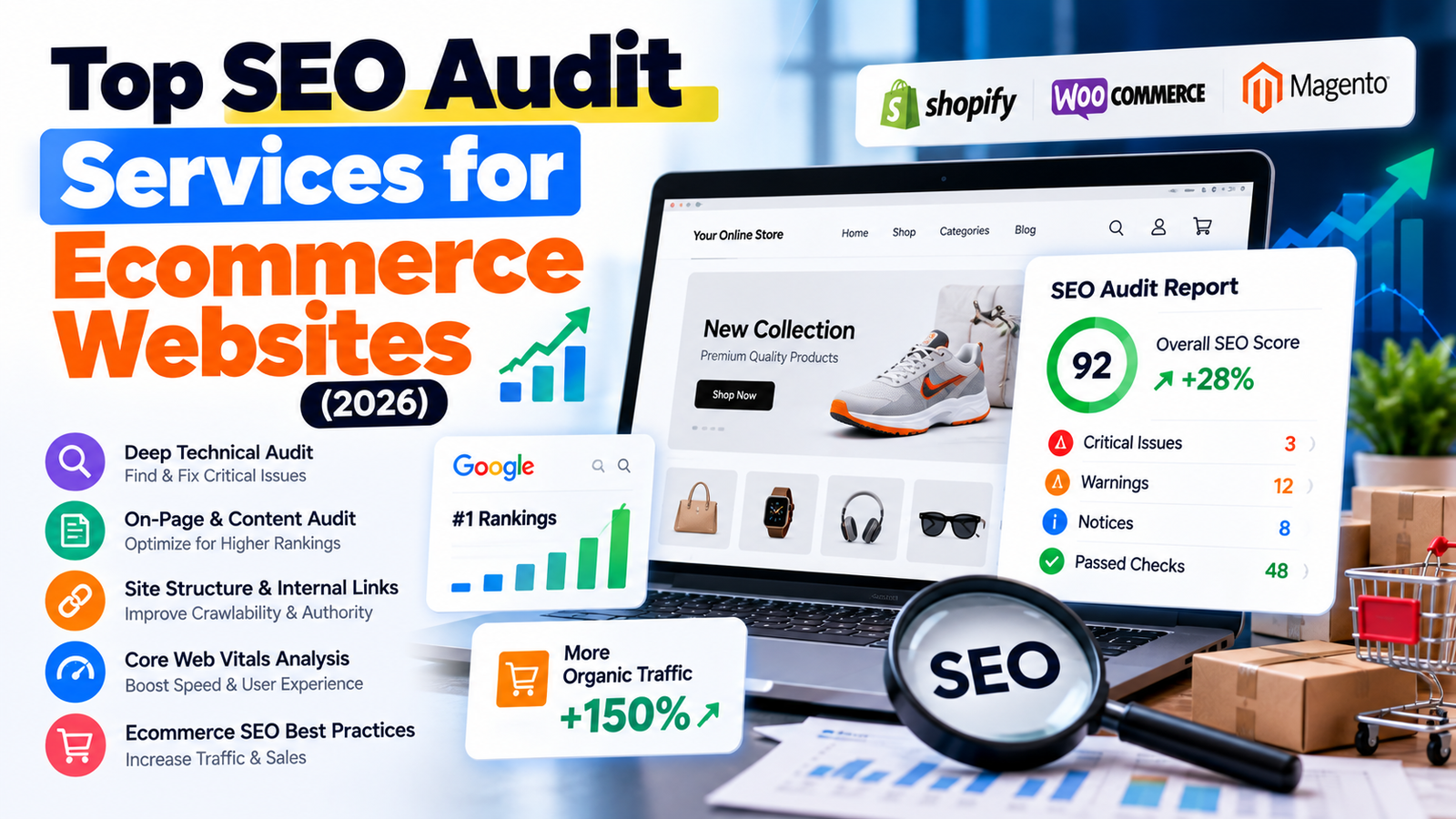
For most ecommerce sites, a solid SEO audit stack combines free baseline tools (Google Search Console, Analytics, PageSpeed Insights) with at least one comprehensive paid platform — Semrush or Ahrefs are the most widely used — and a dedicated crawler like Screaming Frog for larger catalogs. Beyond a certain size or complexity, many stores find more value in a full-service audit from an agency that can interpret the data and prioritize fixes, rather than relying on tools alone.

Organic search remains one of the largest traffic sources for ecommerce — industry research consistently puts it close to half of all ecommerce traffic — which is exactly why a thorough, regular audit matters more for online stores than for many other types of websites.

What an Ecommerce SEO Audit Needs to Cover

Ecommerce sites have audit needs that go beyond a typical website — large product catalogs, variant pages, filtered navigation, and frequently changing inventory all create SEO challenges that a generic site audit can miss. A genuinely useful ecommerce technical SEO audit should check:

  • Technical health — crawlability, indexing issues, site speed, and mobile performance across potentially thousands of pages.
  • Duplicate content — especially from product variants and filtered category pages.
  • Keyword and competitor gaps — where competing stores are capturing search demand that your catalog isn’t currently targeting.
  • Content quality — thin or duplicated product descriptions across similar listings.
  • Backlink profile health — the overall authority supporting the domain, and any risky or low-quality links worth addressing.

Free Baseline Tools Every Store Should Use

Before considering any paid audit platform, a few free tools should already be connected to every ecommerce site:

  • Google Search Console — shows exactly how a store performs in Google search, including which queries drive traffic to which pages.
  • Google Analytics (GA4) — tracks on-site behavior once a visitor arrives, including where they drop off in the buying journey.
  • Google PageSpeed Insights — measures load speed and Core Web Vitals, both of which affect rankings and conversion.
  • Google Merchant Center (for stores running Shopping campaigns) — surfaces product feed issues that can also reflect broader data quality problems affecting organic listings.

These tools are foundational, but on their own they don’t provide the prioritized, actionable recommendations a full audit service delivers.

Comprehensive Paid Platforms

Semrush is among the most widely used all-in-one platforms for ecommerce SEO audits, combining keyword research, technical site audits, competitor analysis, and content optimization in a single dashboard — making it a strong fit for teams that want prioritized recommendations rather than disconnected reports from separate tools.

Ahrefs is particularly strong on the technical and authority side, with a site audit feature that checks for a large range of technical and on-page issues, plus deep backlink and competitor analysis. It’s a common choice for technical SEO teams that need precise, page-level evidence to act on.

Screaming Frog is a dedicated crawler rather than an all-in-one suite, and it earns its place specifically for larger product catalogs — stores with hundreds or thousands of product pages accumulate technical debt quickly, and a focused crawl tool catches issues that broader platforms can sometimes summarize too generally to act on directly.

Surfer SEO focuses specifically on content optimization, comparing existing or draft content against top-ranking pages for a target keyword — useful for improving thin product descriptions or category page content identified during a broader audit.

When Tools Aren't Enough: Hiring an Audit Service

Running these tools produces data — a genuinely useful SEO audit service turns that data into a prioritized, actionable plan. This distinction matters more for ecommerce than for simpler sites, since a large catalog can easily surface hundreds of technical findings, many of which matter far less than others. Knowing which five issues to fix first, out of two hundred flagged problems, is where an experienced auditor adds real value beyond what the raw tool output provides.

A full-service audit typically makes the most sense when:

  • The catalog is large enough that tool output becomes genuinely overwhelming to interpret alone.
  • There’s no in-house technical SEO expertise to translate findings into a prioritized action plan.
  • Rankings or traffic have dropped and the cause isn’t obvious from surface-level data.
  • A migration (new platform, redesign, or domain change) is being planned and needs careful SEO risk assessment beforehand.

What to Look for in an Ecommerce SEO Audit Service

Not all audit services are equally thorough. A genuinely useful one should:

  1. Prioritize findings by actual impact, not just list every technical issue found.
  2. Understand ecommerce-specific patterns — variant duplication, faceted navigation, and seasonal inventory changes — rather than applying a generic website checklist.
  3. Provide clear, specific recommendations, not vague summaries that still require guesswork to act on.
  4. Benchmark against real competitors, not just generic industry standards.

FREQUENTLY ASKED QUESTIONS

Free tools like Search Console and Analytics are essential but limited in scope. Stores with larger catalogs or more competitive categories typically benefit from a paid platform like Semrush or Ahrefs for deeper, prioritized insights.

SEO for Etsy Sellers: Complete 2026 Guide

SEO for Etsy Sellers: Complete 2026 Guide

SEO for Etsy Sellers: Complete 2026 Guide

SEO for Etsy sellers centers on four main factors — keyword-rich titles and tags, complete and accurate listing attributes, strong shop and listing engagement (favorites, sales, reviews), and consistent, active shop management. Etsy’s search algorithm works differently from Google’s, weighing marketplace-specific signals like conversion rate and customer experience alongside traditional relevance factors.

If you’ve been applying general SEO advice to an Etsy shop and seeing little change, that’s often because Etsy’s search algorithm isn’t simply a smaller version of Google — it’s optimized specifically to surface listings that convert, not just listings that match a search term.

How Etsy Search Actually Works

Etsy’s search algorithm prioritizes relevance and listing quality, but weighs them alongside marketplace-specific signals Google doesn’t use the same way — recent sales velocity, customer and market experience scores, and how well a listing’s attributes match what a buyer filtered for. This means two listings can be equally keyword-optimized, but the one with stronger sales history and customer satisfaction will often outrank the other.

Etsy Keyword Research: Where to Start

Good Etsy keyword research starts inside Etsy itself, not with external tools built for Google. Etsy’s own search bar autocomplete reveals what shoppers are actually typing, and tools built specifically for Etsy (like eRank or Marmalead) analyze search volume and competition within the Etsy marketplace specifically — general SEO keyword tools often miss Etsy-specific search patterns entirely. Long-tail, specific phrases (“handmade walnut cutting board” rather than just “cutting board”) tend to perform better, since they match more precisely with buyer intent and face less competition.

Writing Titles That Actually Rank

Etsy titles serve double duty — they’re both a ranking factor and the first thing a shopper reads. The most effective structure front-loads the primary keyword phrase, followed by supporting descriptive terms, without turning into an unreadable string of disconnected keywords. “Handmade Walnut Cutting Board, Wood Serving Board, Housewarming Gift” reads naturally while still covering multiple relevant search terms — unlike a title crammed with every possible keyword with no logical flow.

Using All 13 Tags Strategically

Etsy allows up to 13 tags per listing, and leaving any unused is a missed opportunity. Effective tags cover variations a shopper might search — synonyms, use cases, occasions, and style descriptors — rather than repeating the same core phrase from the title in slightly different word order. A cutting board listing might reasonably use tags covering “charcuterie board,” “housewarming gift,” “wedding gift,” and “walnut wood,” each representing a genuinely different way a buyer might search for the same item.

Complete Listing Attributes Matter More Than Sellers Expect

Etsy’s filtering system (by color, size, material, occasion) relies on the attribute fields sellers fill in during listing creation. Leaving these incomplete doesn’t just miss a minor detail — it can remove a listing entirely from filtered search results, even when the listing itself would have been a strong match. This is one of the most overlooked elements of Etsy listing optimization, since it has no direct equivalent in traditional web SEO.

Why Sales and Engagement Signals Matter So Much

This is the biggest structural difference from Google SEO: Etsy explicitly factors in how well a listing performs once shown — click-through rate, favoriting, and conversion to actual sales. A new listing with zero sales history starts at a disadvantage against an established listing with a strong track record, which is why new listings often benefit from an initial push (sharing on social media, running a small ad) to build early momentum that then supports organic ranking.

Photos and Their Indirect SEO Impact

Photos don’t directly factor into Etsy’s search algorithm the way text does, but they have a significant indirect effect: a listing with poor photos gets fewer clicks and fewer resulting sales, both of which do factor into ranking. High-quality, well-lit photos showing the product from multiple angles and in context (not just on a plain background) consistently improve conversion, which compounds into better search visibility over time.

Shop-Level Factors That Affect Every Listing

Beyond individual listings, overall shop health affects how all of a seller’s listings perform. Consistent new listings, prompt customer response times, and strong overall reviews all contribute to Etsy’s broader trust assessment of a shop, which in turn can influence how favorably its listings get treated in search relative to competitors.

A Simple Etsy SEO Checklist

  • Research keywords using Etsy’s own autocomplete and an Etsy-specific tool.
  • Write a natural, keyword-front-loaded title.
  • Fill in all 13 tags with genuinely different search variations.
  • Complete every relevant listing attribute field.
  • Use high-quality, multi-angle photos.
  • Actively encourage reviews after purchase.
  • List new items consistently rather than in large, infrequent batches.

FREQUENTLY ASKED QUESTIONS

Etsy's algorithm weighs marketplace-specific signals — sales history, favoriting, conversion rate — much more heavily than Google does, alongside standard keyword relevance. A listing can be perfectly keyword-optimized and still underperform without strong engagement signals.

How to Rank Product Pages on Google (Shopify & WooCommerce)

How to Rank Product Pages on Google

How to Rank Product Pages on Google (Shopify/WooCommerce)

To rank product pages on Google, you need unique product descriptions, structured data (product schema), fast page speed, genuine customer reviews, and a logical URL and category structure — the fundamentals are the same whether a store runs on Shopify or WooCommerce, though each platform handles the technical side slightly differently.

Product pages are some of the hardest pages to rank in all of SEO, mainly because thousands of other stores are often selling the exact same product, frequently with the exact same manufacturer-supplied description. Standing out requires treating each product page as content worth writing, not just a listing to fill in.

Why Product Pages Are Uniquely Difficult to Rank

Unlike a blog post or service page, a product page usually competes directly against other stores selling an identical item — sometimes dozens of them, often using near-identical descriptions pulled straight from the manufacturer. This makes differentiation, not just optimization, the real challenge. A technically perfect product page with a copy-pasted description will still struggle against a less polished page with genuinely unique, helpful content.

Write Unique, Detailed Product Descriptions

This is the single highest-impact step for Shopify product page SEO and WooCommerce product page SEO alike. A unique description should go beyond basic specs — answering real questions a buyer might have (sizing, use cases, material differences, how it compares to similar products) rather than repeating generic manufacturer copy. This both helps rankings and genuinely helps conversion, since a thorough description answers questions that might otherwise stop a purchase.

Add Product Schema Markup

Product schema markup tells Google exactly what a page is — price, availability, ratings, and reviews — enabling rich results that show stars, pricing, and stock status directly in search results. This significantly improves click-through rate even without a ranking change, since a listing with visible star ratings naturally draws more clicks than a plain blue link next to it.

  • On Shopify, many themes include basic product schema by default, but it’s worth verifying with Google’s Rich Results Test rather than assuming.
  • On WooCommerce, plugins like Yoast SEO or Rank Math can generate product schema automatically, though manual verification is still worthwhile, especially after theme or plugin updates.

Optimize Titles, URLs, and Meta Tags

Each product page needs a unique title and meta description targeting the specific way customers search for that product — not just the product name, but including relevant modifiers like material, size category, or use case where it genuinely fits. URLs should stay clean and descriptive (/products/mens-leather-wallet rather than an auto-generated string), which both platforms support, though Shopify’s structure includes a fixed /products/ prefix that can’t be removed.

Fix Technical Issues That Specifically Affect Product Pages

A few technical issues show up disproportionately on ecommerce product pages:

  • Duplicate content from product variants — color or size variations can create near-identical pages; proper canonical tags prevent these from competing against each other.
  • Slow-loading image galleries — multiple high-resolution product photos are common speed bottlenecks; compressing images before upload matters more on product pages than almost anywhere else on a site.
  • Out-of-stock pages left live with no plan — a page that goes permanently out of stock should either redirect to a relevant alternative or stay live with clear messaging, rather than returning a broken or confusing experience that wastes any SEO value already built up.

Build Genuine Reviews Into Every Product Page

Reviews do double duty: they add fresh, unique content to an otherwise static page (helping differentiate it from competitors selling the same product), and they build the trust signals — both for Google and for shoppers — that influence whether a ranked page actually converts. Both Shopify and WooCommerce support review apps/plugins that also output review schema, reinforcing the structured data signals mentioned earlier.

Link to Product Pages From Relevant Content

Product pages that only get traffic from direct search, with no supporting internal links, tend to rank more slowly than ones reinforced by a blog post, buying guide, or category page linking into them with relevant anchor text. A blog post about “how to choose a leather wallet” linking directly to specific wallet product pages strengthens both the blog content and the product pages it links to.

Shopify vs. WooCommerce: What Actually Differs

The core principles above apply to both platforms equally. The practical differences come down to control and setup: WooCommerce (built on WordPress) allows more granular control over URL structure and plugin choice, while Shopify handles more of the technical foundation automatically but with slightly less flexibility in areas like URL customization. Neither platform limitation is usually significant enough to be the deciding factor in whether a product page ranks — execution on the items above matters far more than which platform a store runs on.

FREQUENTLY ASKED QUESTIONS

Typically 3 to 6 months for meaningful ranking movement, similar to other SEO content, though highly competitive products in saturated categories can take longer.

AI Overviews vs Traditional SEO — What’s Changed in 2026

AI Overviews vs Traditional SEO — What's Changed in 2026

AI Overviews vs Traditional SEO — What's Changed in 2026

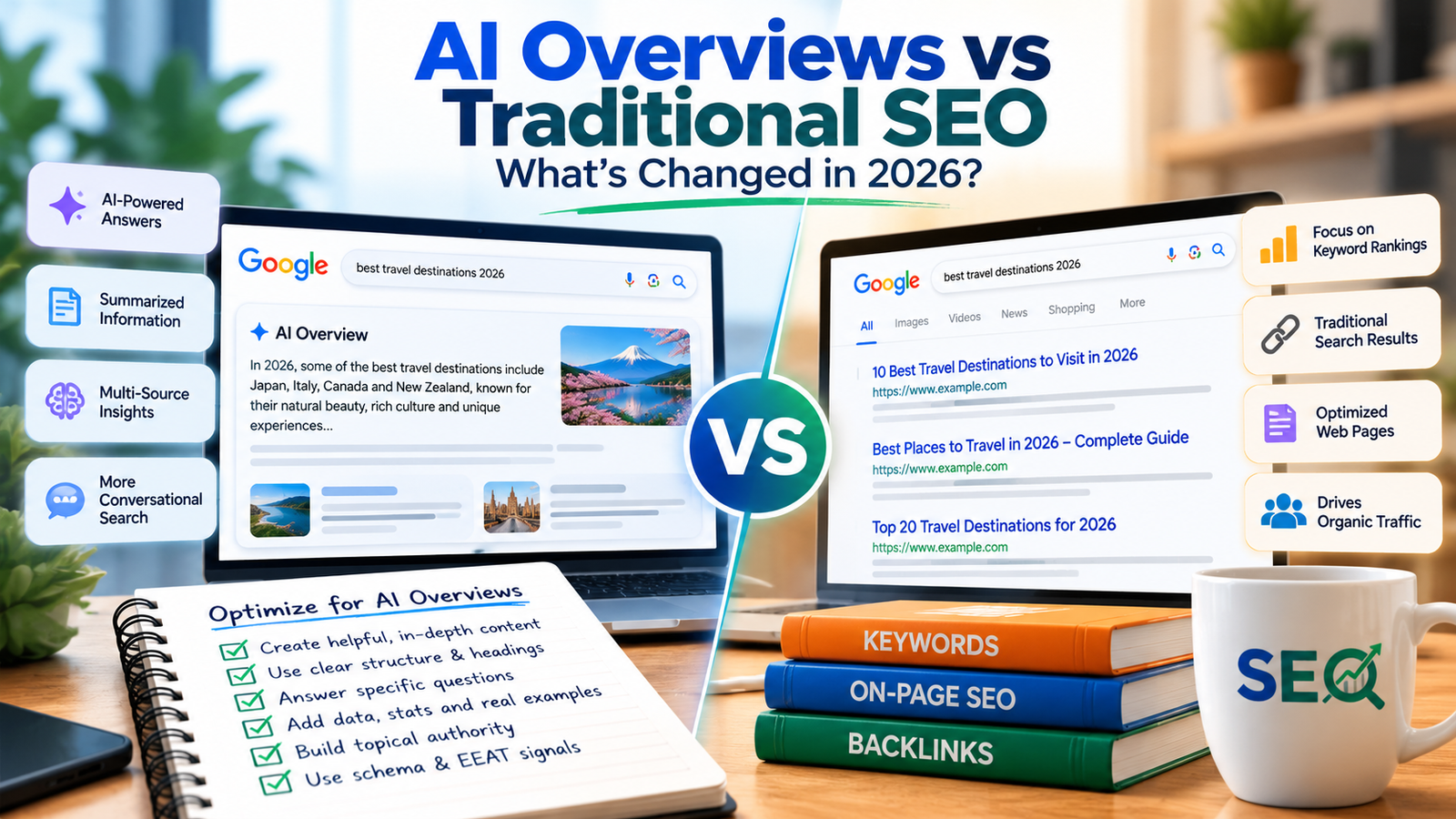
AI Overviews have changed where organic traffic comes from, not whether traditional SEO still matters. Traditional ranking factors — content quality, technical health, backlinks — still determine whether a page gets surfaced at all, including inside an AI Overview. What’s changed is that a growing share of searches now get answered directly on the results page, meaning a page can be the source behind an answer without ever receiving the click it would have gotten in 2022.

If your traffic has started dipping even as your rankings held steady or improved, AI Overviews vs traditional SEO is very likely part of the explanation — not because your SEO stopped working, but because success now sometimes looks different than a click.

What AI Overviews Actually Are

AI Overviews are AI-generated summaries that appear directly at the top of Google’s search results for many queries, synthesizing information from multiple sources into a single, direct answer. They draw from existing web content — meaning the SEO fundamentals that get a page indexed and understood in the first place are still the foundation an AI Overview pulls from, rather than something entirely separate from traditional search.

The Real Change: Zero-Click Search

The most significant shift behind AI Overviews vs traditional SEO is the rise of zero-click search — searches where the user gets their answer directly on the results page and never clicks through to any website. This isn’t entirely new; featured snippets created a smaller version of this effect years earlier. AI Overviews have expanded it considerably, since they can synthesize a full, conversational answer rather than just quoting one snippet from one source.

For businesses, this means impressions and visibility can stay strong, or even grow, while click-through traffic for certain types of queries declines — particularly for purely informational searches where a direct answer fully satisfies the searcher.

Does Traditional SEO Still Work in 2026?

Yes — and this is worth being direct about, because it’s easy to overstate how much has actually changed. Does traditional SEO still work? The pages that get selected as sources for AI Overviews are still determined by the same underlying signals traditional SEO has always relied on: relevance, authority, technical health, and content quality. AI Overviews haven’t replaced these ranking factors; they’ve added an additional layer on top of them, determining how an already-ranking page’s information gets presented and attributed.

In practice, the sites struggling most in 2026 tend to be the ones that were already weak on SEO fundamentals — AI Overviews have simply made those gaps more visible by removing some of the traffic that previously masked underlying weaknesses.

What's Different About Ranking for an AI Overview

While the underlying ranking signals remain similar, a few things matter more specifically for being selected as a source within an AI Overview:

  • Clear, extractable answers — content structured so a specific sentence or paragraph directly and completely answers a likely question.
  • FAQ sections and structured data — pre-formatted question-and-answer content is easier for AI systems to lift directly.
  • Established trust signals — third-party mentions, citations, and a track record of authority appear to factor into which sources get selected and quoted.
  • Freshness — actively maintained, recently updated content seems to be favored over stagnant pages covering the same topic.

What Businesses Should Actually Do Differently

The practical shift isn’t abandoning traditional SEO — it’s adding a layer on top of it. Keep investing in the fundamentals (technical health, quality content, backlinks) while also structuring key content specifically for extractability: clear direct answers near the top of a page, genuine FAQ sections, and schema markup that makes a page’s structure explicit to both traditional crawlers and AI systems.

It’s also worth tracking impressions and brand visibility alongside clicks, since a page can be doing real work — building awareness, driving brand searches, supporting AI citations — even during periods where direct click-through traffic for that specific query type has declined.

The Long-Term Outlook

AI Overviews impact on SEO is likely to keep growing rather than reverse, as AI-assisted search becomes a bigger part of how people search in general, not just a temporary feature. The businesses that adapt fastest tend to be treating this as an evolution of SEO rather than its replacement — keeping the fundamentals strong while adding the structure and credibility signals that help their content get selected and cited, even in a search landscape that’s giving away more answers for free.

FREQUENTLY ASKED QUESTIONS

Often yes, particularly for purely informational queries where the AI-generated answer fully satisfies the search without requiring a click. Commercial and more complex queries tend to be less affected.

Does Google Use Keywords for SEO?

Does Google Use Keywords for SEO?

Does Google Use Keywords for SEO?

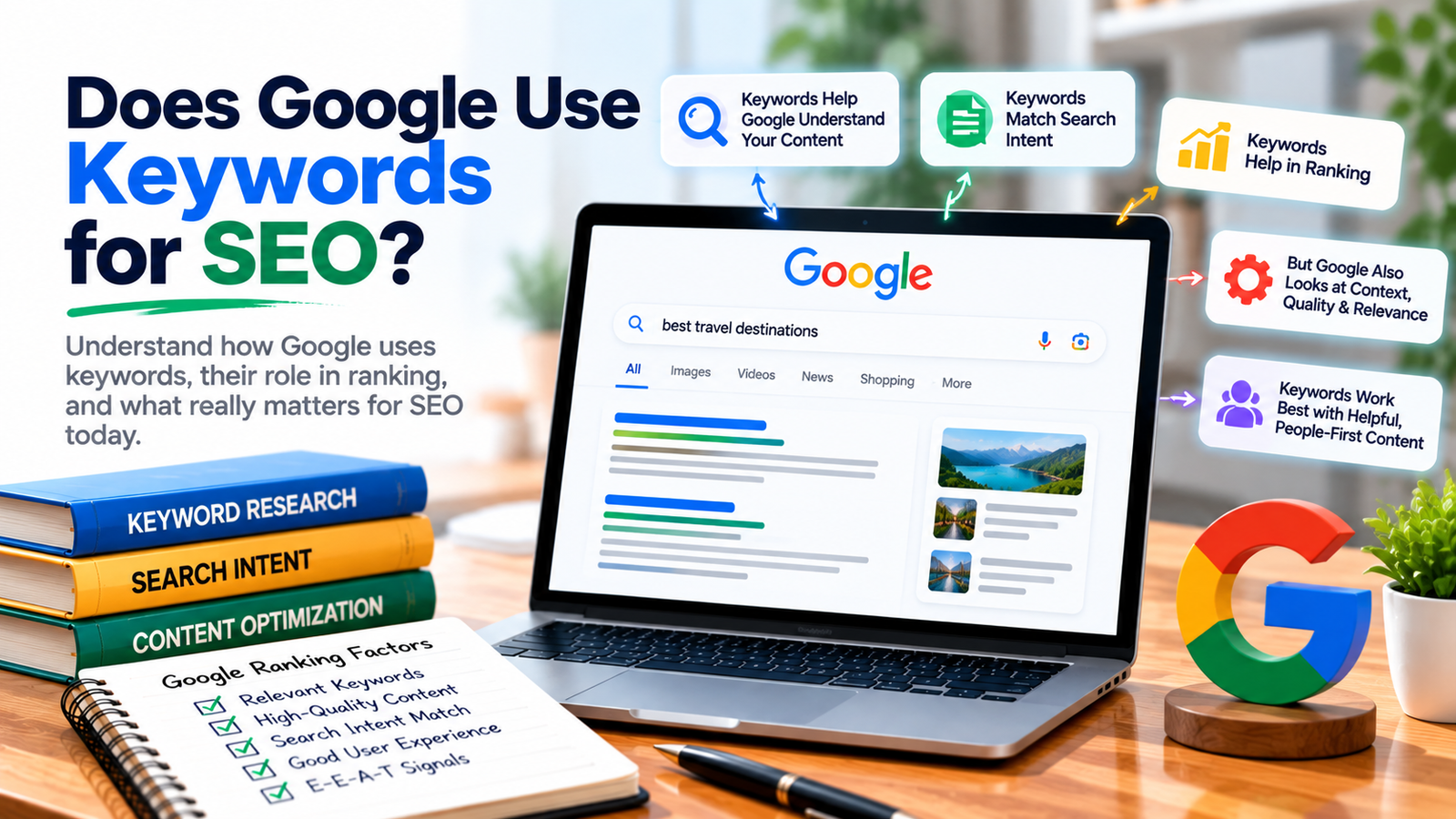
Yes, Google still uses keywords for SEO — but not in the simple, literal way it did in the early days of search. Instead of just scanning a page for exact-match text, Google now interprets keywords as signals of meaning and intent, using natural language understanding to figure out what a page is actually about, even when the exact search phrase never appears word-for-word on the page.

If you’ve ever ranked for a phrase you never actually typed anywhere in your content, that’s not a glitch — that’s exactly how modern keyword matching works.

How Keyword Matching Used to Work

In early search engines, keywords functioned almost like a literal lookup — a page ranked for a phrase largely based on how often that exact phrase appeared on the page. This is the era that produced keyword stuffing as a real, effective (if short-lived) tactic, since simply repeating a phrase more often could genuinely move rankings. It’s also why so much outdated SEO advice still focuses on hitting a specific keyword count or density.

How Google Interprets Keywords Today

Modern Google relies heavily on natural language processing to understand context and meaning, not just literal word matches. This shift became especially pronounced after updates like BERT and later systems focused specifically on understanding language the way humans actually use it — including synonyms, related concepts, and the intent behind a phrase, not just its literal text.

Practically, this means Google can recognize that “affordable web design” and “cheap website development” relate to a similar underlying need, even though the words don’t match exactly. A page thoroughly covering the topic of budget-friendly web design can rank for both phrasings, without ever containing the exact string “cheap website development.”

Does Google Understand Context, or Just Match Words?

This is really the core of the question. Google’s systems are built to understand context — the relationship between words, the likely intent behind a search, and how a page’s overall content relates to that intent. A search for “apple” returns very different results depending on surrounding context clues in a longer query, which wouldn’t be possible with simple keyword matching alone. This context-driven approach is also central to how Google’s AI Overviews and other AI-assisted search features work, since generating a coherent answer requires understanding meaning, not just locating a matching phrase somewhere on a page.

So Are Exact-Match Keywords Still Worth Using?

Yes, but with a caveat. Exact match keywords SEO practices still have value — using the actual phrase a person is likely to search for, especially in a title, heading, or early in a piece of content, remains a clear and direct relevance signal. The difference is that exact matching is no longer the primary mechanism driving rankings; it’s one signal among many, working alongside content depth, related terminology, and overall topical coverage.

What This Means for How You Should Actually Write

Since Google use keywords for SEO purposes through meaning rather than literal matching, the practical implication is straightforward: writing to thoroughly and clearly answer a topic naturally produces the kind of keyword and semantic coverage Google’s systems look for, without needing to obsess over hitting an exact phrase a specific number of times. A page that genuinely, thoroughly covers “how to choose a web design agency” will likely rank for dozens of related phrasings and questions, simply because thorough content naturally covers the language variations real people use.

Where Keyword Matching Still Matters Most

Context understanding hasn’t eliminated the value of keywords entirely — it’s shifted where they matter most:

  • Titles and headings — still a strong, direct signal of what a page covers.
  • Early in the content — confirming relevance quickly, for both users and search engines assessing the page.
  • Matching genuine intent — using the specific phrasing your actual audience searches with, rather than internal jargon that doesn’t reflect how people actually search.

The keywords still matter — what’s changed is that they now work as part of a broader understanding of meaning, not as an isolated, literal matching exercise.

The Bigger Shift: From Keywords to Topics

Perhaps the most useful mental shift is moving from thinking in individual keywords to thinking in topics. Instead of asking “which exact keyword should this page target,” a more accurate modern question is “what topic and intent is this page fully addressing, and which related phrases naturally fall within that.” This reframing tends to produce content that performs better in modern search — including in AI-generated answers, which similarly rely on topical completeness rather than exact keyword presence.

FREQUENTLY ASKED QUESTIONS

Exact matches still carry some relevance signal, but Google primarily relies on understanding meaning and context today, meaning a page can rank for phrases it never literally contains, if it thoroughly covers the related topic.

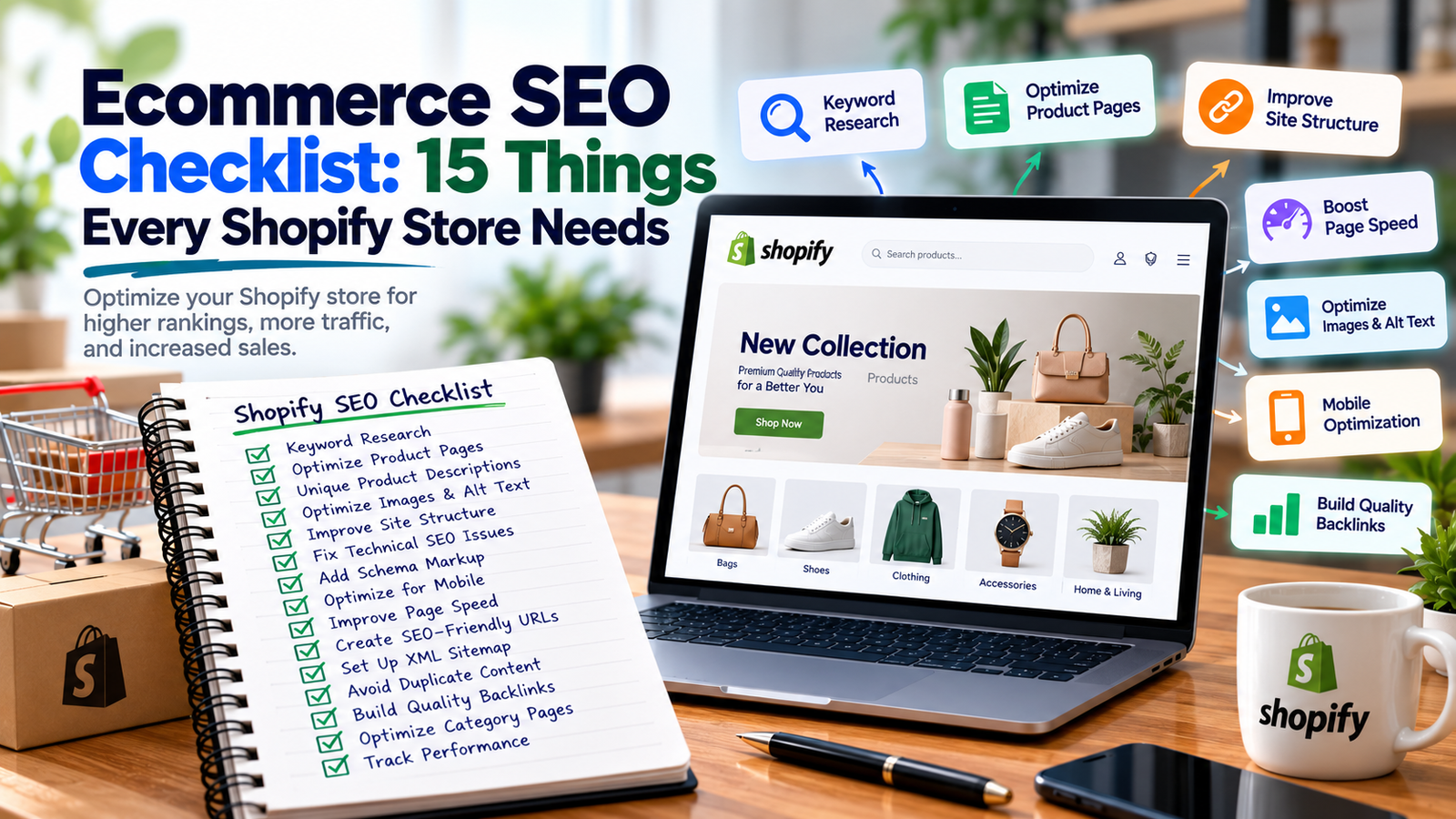
Ecommerce SEO Checklist: 15 Things Every Shopify Store Needs

Ecommerce SEO Checklist: 15 Things Every Shopify Store Needs

Ecommerce SEO Checklist: 15 Things Every Shopify Store Needs

A solid Shopify SEO checklist covers four main areas — technical foundations, product and category page optimization, content, and off-site authority. Below are 15 specific items that consistently separate Shopify stores that rank from ones that don’t, regardless of store size or product category.

Shopify handles a lot of the technical heavy lifting automatically, which is exactly why many store owners assume SEO takes care of itself. It doesn’t — the platform provides the foundation, but the optimization work still has to happen on top of it.

Technical Foundations

1. Clean, descriptive URLs Shopify’s URL structure includes fixed elements like /products/ or /collections/, but the rest should be clean and keyword-relevant — /products/organic-cotton-tshirt rather than a default string of numbers or characters.

2. Fast page load speed Image-heavy product pages are a common speed bottleneck. Compress product images before upload, and limit the number of heavy apps installed, since each one can add load time across the entire store.

3. Mobile responsiveness Most Shopify themes handle this well by default, but it’s worth actually testing checkout and product pages on a real mobile device, not just assuming the theme covers it.

4. Submitted XML sitemap Shopify auto-generates a sitemap, but it still needs to be submitted to Google Search Console manually — this doesn’t happen automatically just because the file exists.

5. Proper canonical tags on variant and filtered pages Product variants and filtered collection pages can create duplicate content issues. Shopify handles canonicalization reasonably well by default, but it’s worth verifying, especially on stores with heavy filtering options.

Product and Category Page Optimization

6. Unique product descriptions Copying manufacturer descriptions word-for-word is one of the most common ecommerce SEO checklist failures — it creates duplicate content across potentially thousands of other stores selling the same product.

7. Optimized title tags and meta descriptions Every product and collection page needs a unique title and description targeting the specific terms customers search for, not just the product name alone.

8. Image alt text on every product photo This helps both accessibility and image search visibility, and gives search engines context about products that image recognition alone can’t always capture accurately.

9. Structured data (product schema) Product schema enables rich results — star ratings, pricing, and availability shown directly in search results — which significantly improves click-through rate from search.

10. Logical collection/category hierarchy A clear structure (Home > Category > Subcategory > Product) helps both customers navigate and search engines understand how pages relate to each other.

Content

11. A blog that targets informational searches Buying guides, comparison posts, and how-to content capture customers earlier in their research, before they’re ready to search for a specific product by name.

12. Internal links between blog content and product pages A blog post about “how to choose running shoes” should link directly to relevant product or collection pages — connecting informational content to commercial pages strengthens both.

13. Customer reviews on product pages Reviews add fresh, unique content to otherwise static product pages, and also contribute to the trust signals that influence both rankings and conversion.

Off-Site Authority

14. Backlinks from relevant sites Guest posts, product reviews from bloggers, and mentions from industry publications all build the domain authority that helps product and category pages rank for competitive terms.

15. Consistent business listings (if there’s a physical presence) For Shopify stores with a physical location or local pickup option, consistent business information across Google Business Profile and directories supports local search visibility alongside standard ecommerce SEO.

What Shopify Already Handles vs. What Needs Manual Work

It’s worth being clear about where Shopify’s defaults are genuinely sufficient and where manual Shopify SEO tips are still necessary. Shopify automatically handles basic site speed infrastructure, SSL certificates, and sitemap generation. It does not automatically write unique product descriptions, optimize meta tags per page, add alt text, or build backlinks — all of which require deliberate, ongoing effort regardless of how well the platform itself performs technically.

Common Mistakes That Undermine Shopify SEO

A few patterns show up repeatedly on underperforming stores:

  • Leaving default, unoptimized meta titles generated automatically from product names alone.
  • Using manufacturer-supplied product descriptions without any rewriting.
  • Installing too many apps, each adding incremental page load time that compounds across the store.
  • Ignoring the blog entirely, missing the chance to capture earlier-stage, informational search traffic.

FREQUENTLY ASKED QUESTIONS

Partially. Shopify handles core technical infrastructure well — speed, security, sitemaps — but content-level optimization (product descriptions, meta tags, alt text, backlinks) still requires manual, ongoing work.


    This will close in 0 seconds